Column · @connerlfel751
Heat Pump Installation Rebates and Efficiency Considerations
A heat pump rebate can feel a little like finding a twenty in last winter’s coat, except the coat is your utility bill and the twenty may be several hundred or several thousand dollars. Naturally, that gets people’s attention. The trouble is that rebates are often discussed as if they are the main event, when they are really just one line item in a much larger decision.
A well-chosen heat pump can lower operating costs, improve comfort, reduce reliance on fossil fuels, and give your old air conditioner and furnace a dignified retirement instead of letting them expire dramatically during a holiday weekend. A poorly chosen one can qualify for a rebate and still disappoint you every time the weather gets rude.
Heat pump installation is not just a shopping exercise. It is a design problem, a math problem, an electrical problem, and occasionally a diplomacy problem between spouses who disagree on what “comfortable” means. Rebates help, but efficiency, sizing, ductwork, electrical capacity, climate, maintenance, and installation quality matter more over the life of the system.
Let’s walk through the real considerations, without pretending every home is the same box with different paint.
Rebates are useful, but they are not a personality trait
Heat pump rebates usually come from one of several places: federal tax credits, state energy programs, utility incentives, local electrification programs, or manufacturer promotions. Some are simple instant discounts. Others show up later as tax credits. Some require specific equipment ratings. Some require a participating contractor. A few make you collect documents like you are applying for a passport for your refrigerator.
The most important thing to understand is that rebate eligibility changes. Programs open, close, get renewed, run out of funding, or revise their requirements. A homeowner who received a generous incentive last year may have qualified under terms that no longer exist. That is not a conspiracy. It is just bureaucracy wearing steel-toed boots.
Federal incentives in the United States have recently included tax credits for qualifying high-efficiency heat pumps, often based on efficiency thresholds such as SEER2, EER2, and HSPF2 ratings, or ENERGY STAR certification categories. State and utility programs may add their own requirements. In some areas, low-to-moderate income households may qualify for larger incentives, while other rebates are available broadly but capped at a fixed dollar amount.
Here is where people sometimes get tripped up: a rebate is not the same as a discount unless it is applied at the point of sale. A tax credit may reduce what you owe when filing taxes, but it is not a check handed to you by a smiling HVAC fairy. If your tax situation is unusual, talk to a tax professional before building your entire budget around a credit.
The best contractors keep current with local rebate requirements because it affects the equipment they recommend and the paperwork they provide. If a quote says “rebates available” but does not specify which program, how much, what equipment qualifies, and who files the paperwork, that phrase has about as much nutritional value as cotton candy.
The alphabet soup of efficiency ratings
Heat pump efficiency labels can look like someone spilled Scrabble tiles across a spec sheet. SEER2, EER2, HSPF2, COP, BTU, tonnage, variable speed, inverter driven. None of these terms is useless, but none tells the whole story by itself.
SEER2 measures seasonal cooling efficiency. A higher SEER2 number generally means the system uses less electricity during cooling season. EER2 measures cooling efficiency under specific hotter test conditions, which can matter in climates where summer arrives with a grudge. HSPF2 measures heating season efficiency. COP, or coefficient of performance, describes how much heat the system moves compared with the electricity it consumes. A COP of 3 means the system is delivering about three units of heat for every unit of electrical energy used, under those test conditions.
The phrase “under those test conditions” is doing a lot of work. Heat pumps become less efficient as outdoor temperatures drop because there is less heat available in the outside air to move indoors. Modern cold-climate heat pumps are much better at this than older units, but physics remains undefeated.
For cooling, a 16 SEER2 system may be perfectly sensible in one home, while another home benefits from a 20 SEER2 variable-speed unit. The higher-rated system usually costs more upfront. Whether it pays back depends on local electric rates, how many hours you run cooling, how long you plan to stay in the home, and whether comfort improvements matter to you beyond simple payback. Comfort is not always easy to put in a spreadsheet, though plenty of engineers have tried valiantly, usually in khakis.
Sizing: where “bigger is better” goes to embarrass itself
One of the most common mistakes in heating and cooling is oversizing. It seems logical at first. If a three-ton heat pump is good, surely four tons is better. That logic works for pizza, not HVAC.
An oversized heat pump can short-cycle, turning on and off too frequently. In cooling mode, that can mean poor humidity removal, uneven temperatures, and extra wear on components. In heating mode, it can reduce efficiency and comfort. You paid for capacity you do not need, and the system repays you by acting fussy.
Undersizing is no picnic either. A heat pump that cannot keep up on very cold or very hot days may run constantly, rely heavily on backup heat, or leave rooms uncomfortable. The trick is to size the system based on the house, not on guesswork, square footage alone, or whatever unit happened to be there before.
A proper load calculation, often referred to as Manual J, considers insulation levels, window types, air leakage, ceiling heights, orientation, local climate, number of occupants, and more. Two homes with the same square footage can have very different loads. A shaded brick ranch with upgraded attic insulation is not the same animal as a two-story house with sun-blasted west-facing glass and an attic that feels like a pizza oven.
If a contractor sizes your heat pump after a five-minute glance at the old nameplate, you are not getting engineering. You are getting archaeology.
Ductwork: the quiet troublemaker
Heat pump efficiency ratings assume the system can actually move air properly. Your home’s ductwork has opinions about that, and they are not always polite.
Leaky ducts can waste a surprising amount of conditioned air, especially when they run through attics, crawl spaces, garages, or other unconditioned areas. Undersized returns can starve the system for air. Poorly designed supply runs can leave one bedroom chilly while another feels like a terrarium. A high-efficiency heat pump connected to lousy ducts is like putting racing tires on a shopping cart.
This is where experienced heating contractor work matters. Static pressure measurements, duct inspections, airflow balancing, and sealing can make or break performance. In some homes, duct modifications are a smart part of the project, even if they do not have the glamour of the outdoor unit. Nobody invites neighbors over to admire a properly sized return duct, but your utility bill may applaud quietly.
Homes without existing ductwork may consider ductless mini-split heat pumps. These systems can be excellent for additions, garages, older homes, and rooms that have always been the family’s designated climate complaint zone. They also work well when zoning is a priority. The trade-off is that indoor wall-mounted heads are visible, and layout matters. One indoor unit cannot magically condition a maze of closed-off rooms unless air movement has been considered.
Cold climates and backup heat
The old criticism of heat pumps was that they worked fine until it got cold, at which point they turned into expensive fans with self-esteem issues. That criticism used to be fair in many regions. It is less fair now.
Modern cold-climate heat pumps can produce useful heat well below freezing. Some maintain strong capacity at outdoor temperatures around 5 degrees Fahrenheit, and certain models can operate below zero. Still, capacity and efficiency decline as the temperature falls. Your local winter design temperature matters, as does the home’s heat loss.

Backup heat can be electric resistance, a gas furnace in a dual-fuel setup, hydronic heat, or another source. Electric resistance backup is simple and common, but it uses much more electricity than the heat pump itself. It is best used sparingly, not as the star of the show. Dual-fuel systems pair a heat pump with a gas furnace, switching based on outdoor temperature, utility rates, or system controls. In areas with very cold winters or high electric rates, this can be a practical compromise.
The decision is not ideological. It is math, comfort, and infrastructure. If a house already has a newer gas furnace, the smartest move may be adding a heat pump and using the furnace as backup. If the furnace is ancient and the household wants to move away from gas, a cold-climate heat pump with carefully planned auxiliary heat may be the better path. A furnace repair service can keep an older unit alive, but there comes a point where repairs become a subscription plan for disappointment.
Electrical capacity is not a footnote
Heat pumps run on electricity, and your panel may or may not be ready for the promotion. Many systems require dedicated circuits. If electric backup heat is part of the design, the electrical load can be substantial. Older homes with 100-amp service may need evaluation before adding a heat pump, electric water heater, EV charger, induction range, or other modern electrical loads.
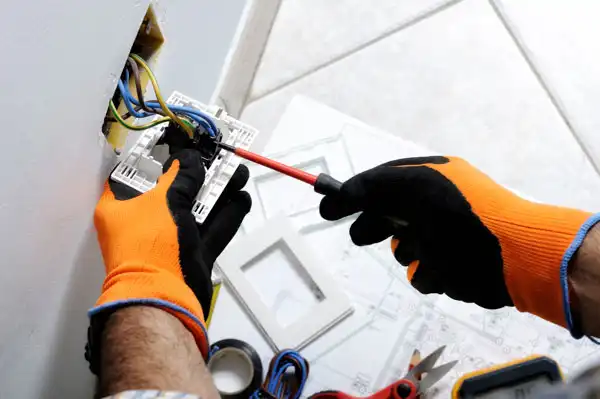
This is where an Electrician becomes part of the heat pump conversation. Panel capacity, breaker space, wire sizing, grounding, disconnects, and code compliance all matter. A clean HVAC installation can still be delayed if the electrical side was treated as an afterthought.
Sometimes the electrical upgrades are modest. Sometimes they are not. A panel upgrade or service upgrade can change the budget significantly, and it may affect rebate timing or eligibility. Better to know that before the old air conditioner is sitting in the driveway like a defeated robot.
Companies that handle multiple trades under one roof, such as Service Lion Plumbing Heating Air Electric, can be useful in projects where HVAC, electrical, and plumbing details overlap. One coordinated schedule beats three contractors blaming each other while your thermostat stares at you with betrayal in its tiny digital eyes.
Rebates often reward equipment, not installation quality
This is one of the great ironies of rebate programs. They tend to focus on equipment ratings because ratings are easy to verify. Installation quality is harder to measure, but it often determines whether the homeowner gets the promised efficiency.
A high-efficiency heat pump needs correct refrigerant charge, proper airflow, sound duct design, clean electrical work, accurate controls, and good commissioning. If those are off, the system may still run, but not well. It might cool, but struggle with humidity. It might heat, but rely too often on backup. It might pass the “air comes out of vents” test, which is sadly not the same as professional performance.
Ask whether the installer measures static pressure, verifies airflow, checks refrigerant charge according to manufacturer procedures, confirms temperature split, sets up thermostat staging properly, and explains filter requirements. If the answer is a blank stare, keep shopping.
Heat pumps are not forgiving of lazy installation. Neither are homeowners after the first utility bill lands.
A short rebate sanity checklist
Use this before signing a contract, not after, when everyone suddenly develops selective memory.
- Confirm the exact rebate or tax credit program, not just a vague promise that “there should be something.”
- Verify the specific model numbers qualify, including indoor and outdoor unit combinations.
- Ask who submits paperwork and what documents you will receive.
- Check whether electrical upgrades, ductwork, or permits affect eligibility.
- Keep invoices, AHRI certificates if applicable, product labels, and approval emails in one folder.
That folder may not be glamorous, but future you will appreciate it. Future you is very practical.
Heat pumps and the rest of the mechanical household
A heat pump rarely lives in isolation. It shares a home with plumbing, electrical systems, insulation, ventilation, water heating, and indoor air quality concerns. When one system changes, the others may need attention.
For example, sealing and insulating a house can reduce heating and cooling loads, making a smaller heat pump possible. That can lower installation cost and improve comfort. But tightening a house may also require better ventilation. Replacing a gas furnace with an all-electric heat pump may affect combustion appliance considerations if a gas water heater remains. Adding a heat pump water heater may reduce basement humidity, which can be delightful, unless the space is already too cold in winter.
Plumbing can enter the picture too. If a mechanical room is being reworked, it may be the right moment to evaluate water heater installation options, water heater repair needs, water softener installation, or plumbing repiping in older homes with deteriorated lines. No, a heat pump installer is not automatically a Plumber, but real houses do not divide themselves into neat trade categories just because brochures do.
Drain cleaning, Rooter service, Hydrojetting, Plumbing leak repair, and Septic system service may seem unrelated until a crawl space, basement, or utility area creates access problems or moisture issues. I have seen HVAC projects delayed because a slow leak turned a platform into sponge cake. Nobody budgets for “surprise swamp under air handler,” yet there it is, living its truth.
Cooling performance: not just lower bills
People often discuss heat pumps as heating equipment, but in many homes they replace or supplement central air conditioning. A heat pump is essentially an air conditioner that can reverse direction, moving heat indoors in winter and outdoors in summer.
For cooling, efficiency is important, but comfort depends heavily on humidity control and runtime. Variable-speed and two-stage systems can run longer at lower output, which often improves humidity removal and evens out temperatures. Single-stage equipment can still work well if properly sized, but it is less flexible.
If your current system needs frequent Air conditioning repair, or if you have an Air conditioning repair service on speed dial with its own ringtone, replacement may deserve serious consideration. The same goes for older units that use refrigerants being phased down or units with major compressor problems. Regular Air conditioning maintenance and an annual Air conditioning tune-up can extend equipment life, but maintenance cannot make a tired compressor young again. If it could, technicians would also be selling it to middle-aged knees.
A good Air conditioning contractor should discuss both heating and cooling performance. Some heat pumps are optimized for cold weather. Others excel in cooling efficiency. The best choice depends on climate and household priorities.
The payback question, asked honestly
People love to ask, “How long until it pays for itself?” It is a fair question, but the answer can be slippery because the baseline matters. Are you replacing a working 12-year-old air conditioner and gas furnace? An electric resistance furnace? Oil heat? Propane? A dead compressor? A window unit collection held together by hope?
If you currently heat with electric resistance, oil, or propane, a heat pump may produce significant operating savings. If natural gas is cheap in your area and electricity is expensive, savings may be modest or depend on using the heat pump mainly during milder weather. If solar panels are part of the household equation, the economics may change again.
Installation cost also varies widely. A simple like-for-like ducted heat pump replacement may be relatively straightforward. A cold-climate system with duct modifications, panel upgrades, zoning, and backup heat controls costs more. Ductless multi-zone systems can be efficient and flexible, but equipment and labor costs rise with each indoor unit.
Rebates can shorten the payback period, but do not let them hypnotize you. A $2,000 rebate on the wrong system is not a bargain. It is a coupon for regret.
When the cheapest quote is expensive
There is nothing wrong with comparing quotes. You should. Just compare the same scope, not three completely different projects wearing similar price tags.
One quote may include duct sealing, permits, thermostat setup, electrical disconnect replacement, line-set evaluation, condensate improvements, and commissioning. Another may include “install unit” and a handshake. The second quote is cheaper because it contains fewer grown-up responsibilities.
Permits matter. Code compliance matters. Manufacturer installation requirements matter. Warranty registration matters. Condensate drainage matters more than people think, especially when an air handler lives above a ceiling. Water has a gift for finding the most expensive path downward.
A responsible contractor will also discuss service access. If filters are impossible to change without a ladder, a yoga instructor, and emotional support, they will not be changed often enough. Maintenance should be easy enough that normal humans will do it.
Efficiency beyond the equipment label
A heat pump’s rated efficiency is only part of home performance. The building shell can either help the system or heckle it.
Attic insulation is often one of the best improvements, especially in older homes. Air sealing can reduce drafts and heat loss. Window upgrades help in some cases, though they tend to be more expensive per unit of energy saved than insulation or sealing. Shading, curtains, and smart thermostat settings can also affect comfort and runtime.
Thermostat habits matter with heat pumps. Deep setbacks in winter can trigger backup heat during recovery, depending on controls and outdoor temperature. A modest setback may be fine, but treating the thermostat like a slot machine rarely improves efficiency. Heat pumps generally prefer steady operation. Let them cruise. They are not furnaces, and they do not appreciate being asked to sprint every morning at 6:30.
Filter maintenance matters too. A clogged filter reduces airflow, hurts efficiency, and can cause icing, nuisance shutdowns, or premature wear. Use the filter type recommended for your system. Very high-MERV filters can restrict airflow if the duct system is not designed for them. Cleaner air is good. Choking your blower is not.
Gas, electric, and the practical middle ground
Some homeowners want to electrify everything. Others prefer gas for heat, cooking, or backup reliability. Many simply want comfort at a reasonable cost and would rather not become amateur utility economists. Fair enough.
If gas piping is being modified, use a qualified Gas installation service. If a furnace remains, make sure venting, combustion air, and safety controls are inspected. If you are keeping gas only for backup heat, it may change your monthly fixed charges or long-term cost assumptions. Local utility rates matter.
Hybrid systems are worth discussing where winters are harsh or utility prices favor gas during peak cold. The heat pump handles mild and moderate weather efficiently, while the furnace takes over when it is more economical or comfortable to do so. Controls can automate the switch. Done well, homeowners barely notice. Done poorly, everyone notices and develops opinions.
The “while you’re at it” trap
Mechanical projects attract add-ons the way kitchens attract junk drawers. Some add-ons are wise. Others are wallet confetti.
Surge protection for modern inverter equipment can be sensible. Better filtration or a media cabinet may be worthwhile if airflow supports it. Duct sealing, insulation, and a new thermostat can be smart. UV lights, oversized accessories, and unnecessary zoning can be less compelling depending on the home.
Lighting contractor work may come up if attic or mechanical room access is poor. A simple service light near equipment can make maintenance safer and faster. It is not glamorous, but neither is holding a flashlight in your teeth while balancing on joists. If the project includes broader electrical improvements, small practical upgrades like this can be bundled efficiently.
The guiding question is simple: does the add-on improve reliability, safety, serviceability, comfort, or measurable performance? If not, admire the brochure and move along.
Questions worth asking before you buy
A good contractor will welcome informed questions. A weak one may act wounded, as if asking about load calculations is a personal insult. That reaction tells you plenty.
- Will you perform or provide a load calculation for my home?
- What efficiency ratings apply to the exact matched system you are proposing?
- Does my ductwork need sealing, resizing, or balancing?
- Will my electrical panel support the system and backup heat?
- What maintenance does this system need, and what can I realistically do myself?
These questions are not nitpicking. They are the difference between buying a heat pump and buying a heat pump installation. The second one is what actually heats and cools Air conditioning tune-up your house.
Maintenance after installation
Once the system is installed, give it a fighting chance. Replace or clean filters on schedule. Keep the outdoor unit clear of leaves, snow, weeds, and ambitious shrubbery. Schedule professional maintenance before peak season if possible. Spring and fall are popular for a reason, but contractors’ calendars fill quickly once the first heat wave or cold snap makes everyone remember thermodynamics.
During service, a technician should inspect electrical connections, refrigerant performance, condensate drainage, coils, blower components, controls, defrost operation, and overall system function. For ductless systems, indoor heads need periodic cleaning. Neglected mini-splits can become little wall-mounted museums of dust.
Listen to the system. New noises, short cycling, ice buildup, rising utility bills, or rooms drifting out of comfort range deserve attention. Small problems often stay cheaper when caught early. This is true for HVAC, plumbing, cars, and children with markers.
What a good heat pump decision feels like
A good heat pump project usually has a certain rhythm. The contractor asks questions before giving answers. They look at the existing equipment, ducts, panel, insulation clues, thermostat location, and comfort complaints. They explain trade-offs without making every option sound like either perfection or doom. The quote names real model numbers. Rebate information is specific. The installation scope includes the unglamorous details.
The homeowner, meanwhile, understands that the best choice may not be the cheapest or the most efficient unit on paper. It is the system that fits the house, the climate, the electrical service, the budget, and the people living there.
Rebates are worth pursuing. Efficiency ratings are worth comparing. But the final decision should rest on installed performance, not sticker excitement. A heat pump can be a terrific investment, especially when paired with sound design and careful installation. It can make a home quieter, more comfortable, and less expensive to operate. It can also reduce the number of machines fighting for space in the basement, which is a noble cause if your basement already contains holiday decorations from three presidential administrations.
Choose the rebate if it fits. Choose efficiency if the math supports it. Choose the contractor as carefully as the equipment. Your heat pump will live with you for a long time, and unlike a bad haircut, it cannot be hidden under a hat.
Name: Service Lion Plumbing Heating Air Electric
Address: 521 W Briardale Ave, Orange, CA 92865, United States
Phone: (657) 337-3622
Website: https://callservicelion.com/
Email: [email protected]
Hours:
Monday: Open 24 hours
Tuesday: Open 24 hours
Wednesday: Open 24 hours
Thursday: Open 24 hours
Friday: Open 24 hours
Saturday: Open 24 hours
Sunday: Open 24 hours
Open-location code: R48R+WV Orange, California, USA
Map/listing URL:
https://www.google.com/maps/search/?api=1&query=Google&query_place_id=ChIJQU4LBWHV3IARtnABtyykSA4
Google Map:
Socials:
https://www.facebook.com/ServiceLionCA/
https://www.youtube.com/channel/UCR_L35QzsRTxYZtX8PxJvPw
Local Service Information
Service Lion Plumbing Heating Air Electric provides plumbing, drain, heating, air conditioning, and electrical services from its Orange, California location.The company serves homeowners and properties throughout Orange and communities across Orange County and surrounding areas.
Available services include plumbing repairs, water heater work, drain and sewer services, heating and cooling service, electrical repairs, panels, lighting, outlets, and related home-system work.
Service is available for residential properties as well as light commercial needs described within the company's local service-area information.
The company's website emphasizes locally operated service, coordinated home-system support, and practical scheduling for plumbing, HVAC, and electrical needs.
The matching public business listing shows the Orange location as open 24 hours a day, seven days a week.
For service information or scheduling, call (657) 337-3622 or visit https://callservicelion.com/.
The public map listing identifies the business at 521 W Briardale Ave, Orange, CA 92865 and can be used for location and direction information.
Popular Questions About Service Lion Plumbing Heating Air Electric
What services does Service Lion Plumbing Heating Air Electric provide?
The company provides plumbing, drain and sewer, heating, air conditioning, and electrical services. Its published services include plumbing repair, water heaters, drain clearing, sewer work, HVAC repair and installation, electrical repairs, panels, circuit breakers, lighting, outlets, and related services.
Where is Service Lion Plumbing Heating Air Electric located?
The matching business location is 521 W Briardale Ave, Orange, CA 92865, United States.
What areas does Service Lion Plumbing Heating Air Electric serve?
The company serves Orange County and surrounding communities. Its published service-area information includes Orange, Anaheim, Brea, Yorba Linda, Fullerton, Huntington Beach, Newport Beach, Costa Mesa, Irvine, Lake Forest, and additional nearby cities.
Is Service Lion Plumbing Heating Air Electric open 24 hours?
The matching public business listing shows the location as open 24 hours on Monday through Sunday.
Does Service Lion Plumbing Heating Air Electric work on drains and sewer lines?
Yes. Published services include drain clearing, rooter service, camera inspection, hydro jetting, sewer line repair and installation, water line work, slab leak detection, and trenchless sewer line repair.
Does Service Lion Plumbing Heating Air Electric provide heating and air conditioning service?
Yes. Its published HVAC services include air conditioning repair and installation, heating service, furnace work, heat pumps, air ducts, indoor air quality assessments, and thermostat installation.
Does Service Lion Plumbing Heating Air Electric provide electrical service?
Yes. Published electrical services include repairs and installations, electrical panels, circuit breakers, safety inspections, lighting, outlets and switches, surge protection, generators, and EV charging equipment installation.
How can I contact Service Lion Plumbing Heating Air Electric?
Call (657) 337-3622.
Email: [email protected]
Website: https://callservicelion.com/
Facebook: https://www.facebook.com/ServiceLionCA/
Landmarks Near Orange, California
Old Towne Orange Historic District
A central historic district and useful geographic reference point for the Orange community.
Plaza Park
A well-known public gathering point in the center of Old Towne Orange.
Orange Public Library & History Center
A civic landmark serving residents near central Orange.
Hart Park
A major public park and recreation area south of central Orange.
Eisenhower Park
A public park serving neighborhoods in northern Orange.
Santiago Oaks Regional Park
A regional recreation and open-space landmark on the eastern side of Orange.
Irvine Regional Park
A large regional park and recognizable reference point east of the city.
Orange Park Acres
A distinctive residential community and service-area reference point in eastern Orange.
El Modena
An established Orange neighborhood that provides a practical local coverage reference.
Glassell Street
One of the city's principal north-south streets and a useful route through central Orange.
Lincoln Avenue
A major east-west roadway serving northern Orange and nearby communities.
State Route 55
A primary regional freeway connecting Orange with other parts of Orange County.